No matter if you’re filming a local commercial or a summer blockbuster, maintaining safe traffic flow around the set is an important part of production planning. Streets may need to close, traffic may need to stop between takes, and crew vehicles, equipment, pedestrians, and curious onlookers can introduce additional challenges.
Working with an experienced professional traffic control company like Traffic Plan helps manage these situations while keeping your production on schedule, the public protected, and traffic control compliant with local regulations.
Before the Cameras Roll
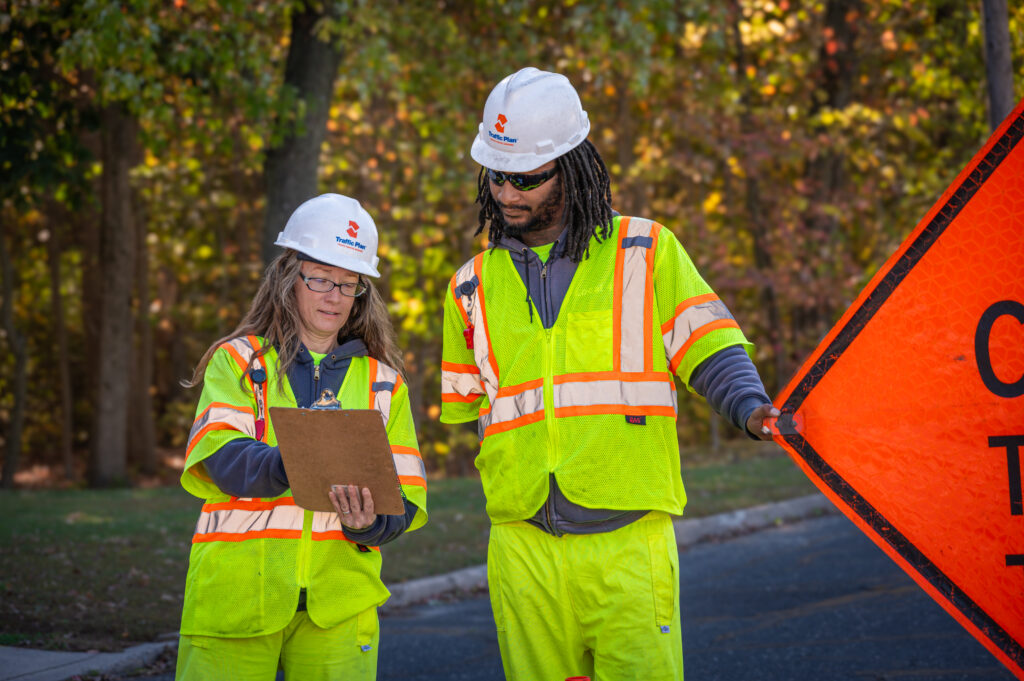
Traffic planning should begin as soon as a filming location is selected. Rural roads, suburban neighborhoods, and busy city streets each present different challenges. Depending on the location and duration of the shoot, traffic may require a full detour around the site or temporary stoppages controlled by trained flaggers using equipment like cones, barricades, and signage.
To get approval to film from local authorities, engage a professional traffic control company to develop a . An MOT plan details how vehicles and pedestrians will safely navigate the area during production and establishes the appropriate traffic control devices and procedures called for in the Federal Highway Administration’s Manual on Uniform Traffic Control Devices (MUTCD). You’ll need to submit the plan to the appropriate municipality or agency for review and approval.
An effective MOT plan considers situations such as:
- If traffic is stopped for a take, where will vehicles begin to back up? Could that line of cars reach an intersection or railroad crossing?
- Will residents and customers still be able to access homes and businesses?
- Can police, fire, and emergency medical vehicles get through if necessary?
Planning ahead also helps production teams avoid an expensive problem: losing shooting time because traffic conditions, access requirements, or approvals weren’t addressed before the crew arrived.
During the Shoot
Once production begins, conditions can change quickly. Maybe a take runs longer than anticipated, a delivery truck arrives, or traffic volume suddenly increases. Communication between the production team and traffic control personnel becomes especially important.
Typically, the first assistant director manages on-set safety, while specialized department heads oversee specific hazards. Their close communication with the traffic control team, coordinating closures and temporary stops with the production schedule, is important throughout, from the first arrival of the film crew to the last truck leaving.
Pedestrian traffic will need to be managed as well. Crowds may gather to view the shoot, trying to catch glimpses of the actors and scenes. Guiding those pedestrians around restricted areas while avoiding vehicles, equipment, and the production itself requires careful planning of safe routes.
Keep Production Moving
With the Mid-Atlantic region becoming the location for more and more movies and miniseries, the need for professional on-location traffic control is on the rise. If you’re a production company with plans to film here, or a municipality with questions regarding traffic and public safety concerns during a filming, contact Traffic Plan to learn more.